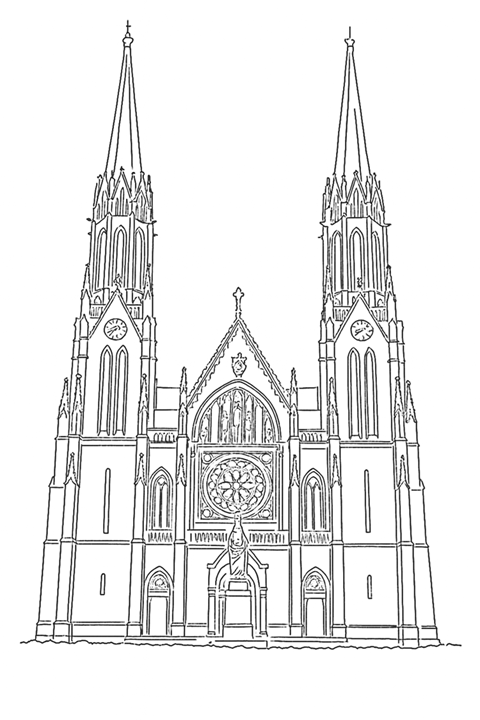
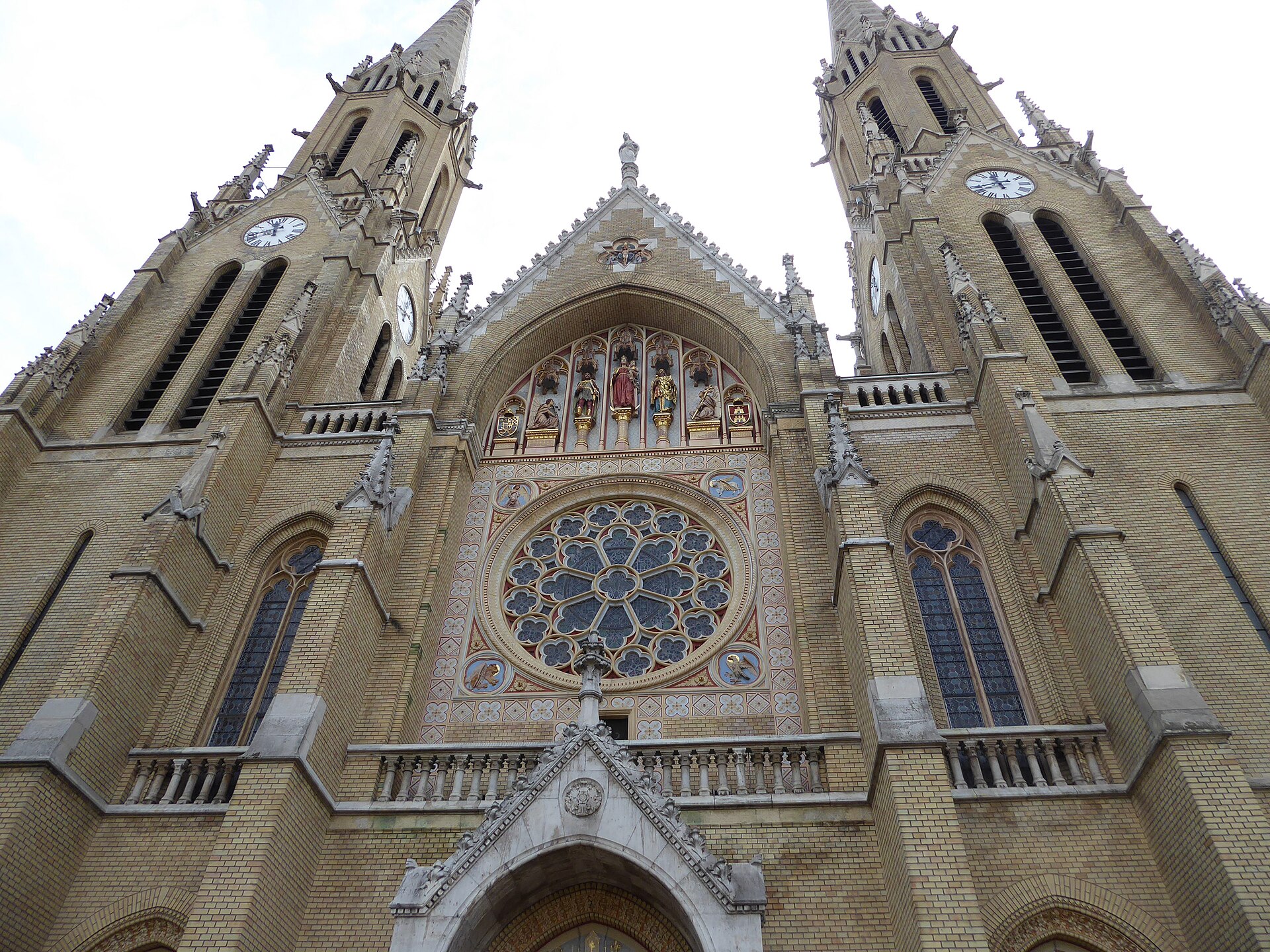
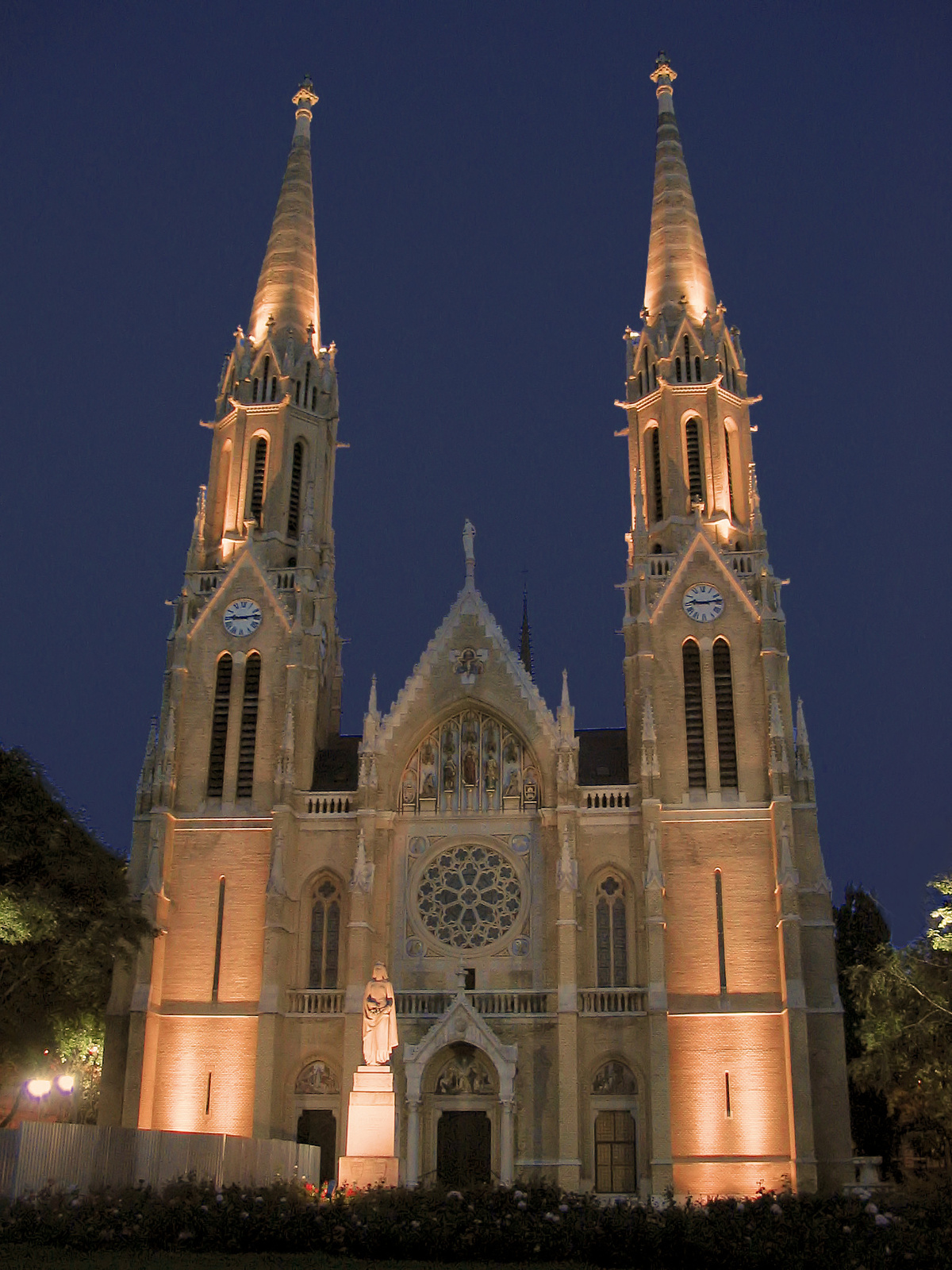
Built between 1893 and 1901 to the plans of Imre Steindl, our Neo-Gothic church draws on the tradition of French Gothic with modern technical solutions. It is a listed monument (no. 853) and one of the notable churches of the Archdiocese of Esztergom-Budapest.
Facts
- Built: 1893–1901
- Architect: Imre Steindl
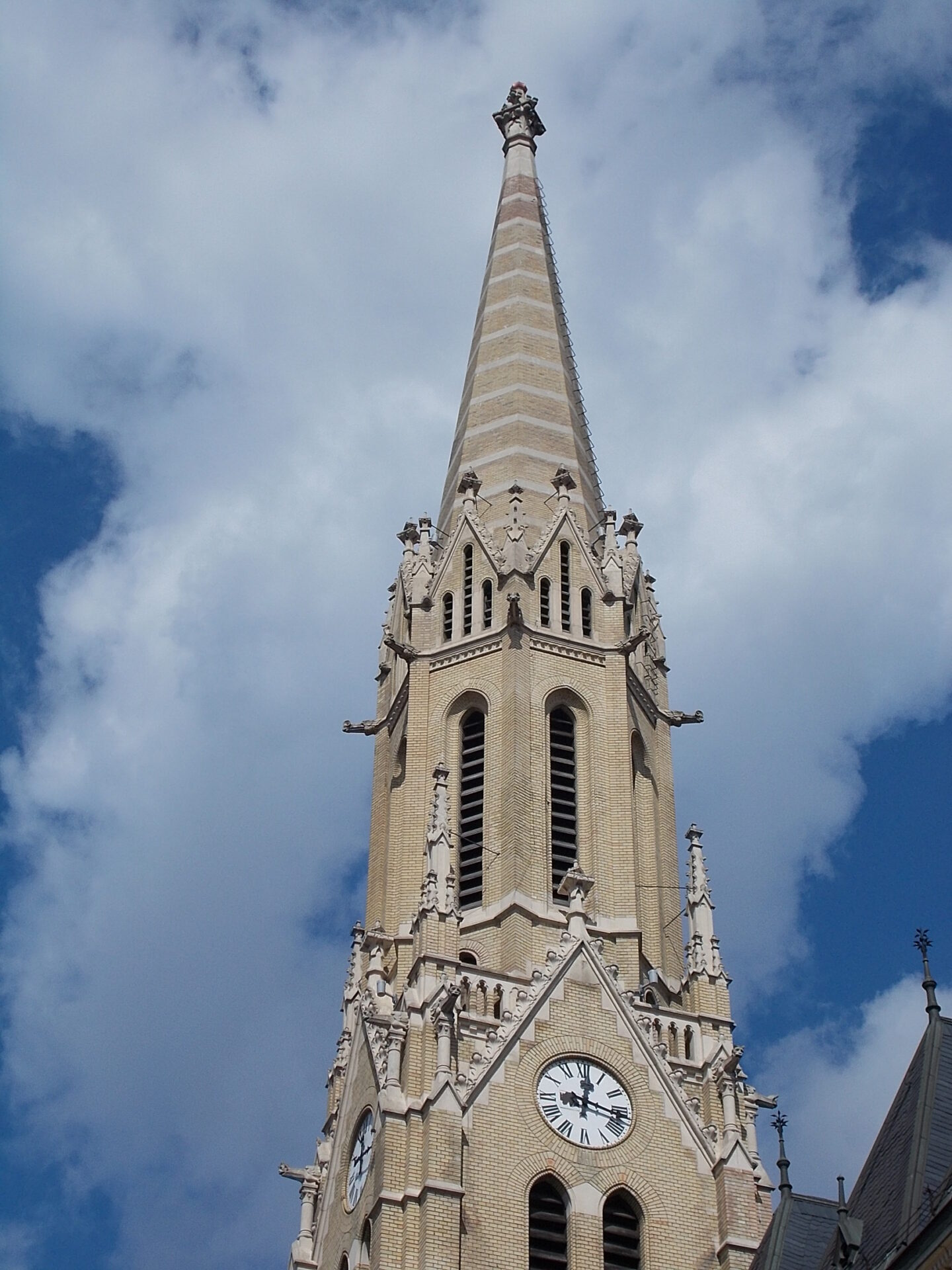
- Height of the two towers: 76 m
- Length: 62 m, width: 21.6 m
- Floor area: 1,800 m²
- Capacity: about 2,600 people
- Nave vault height: 16.2 m, aisles: 15.3 m
The building
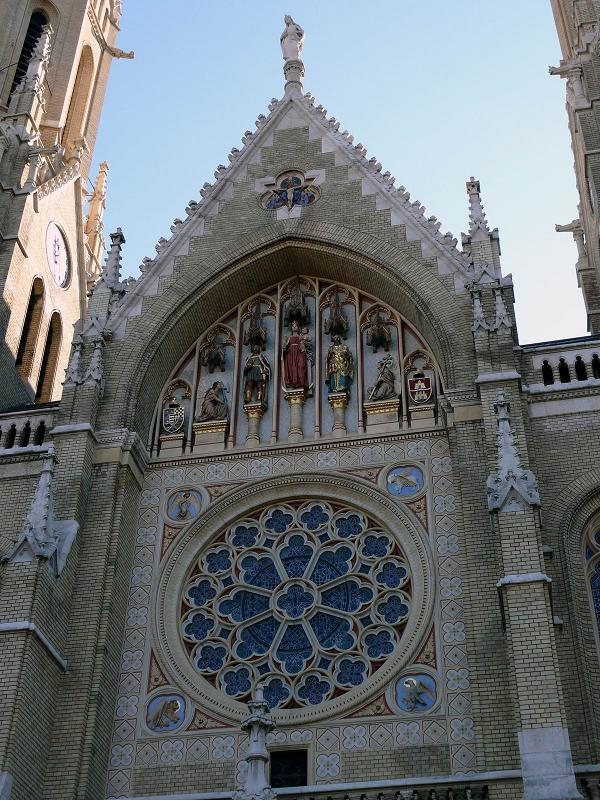
The church has a nave with two aisles, a transept, and a two-towered main façade; the main door and side entrances open between the towers. At the peak of the gable stands Kiss György’s statue of St Elizabeth, below it a Gothic rose window in a ceramic frame. In the pointed-arch field of the façade gable stand Köllő Miklós’s statues of St Ladislaus, the Virgin Mary and St Stephen, flanked by a kneeling angel on each side and the coats of arms of the country and the capital. The nave is divided into six bays up to the transept; one more bay after the crossing and a hexagonal sanctuary close the plan. Octagonal stair towers stand between the nave and the aisles.
The walls are clad in yellow pressed brick, with carved natural stone on exposed parts and a natural slate roof. The terracotta decorations come from Vilmos Zsolnay’s factory in Pécs; Zsolnay and Steindl worked together to develop the suitable material, the so-called “Steindl mass”, later known as pyrogranite.
Digging of the foundations began on 23 July 1893 and construction on 11 September 1893; the foundation stone was laid on 20 October 1895 by Emperor-King Franz Joseph I himself. Construction was led on site by Ferenc Schőmer on behalf of the architect. The building rests on a concrete slab 2 metres thick, 3.2 metres under the towers.
The interior
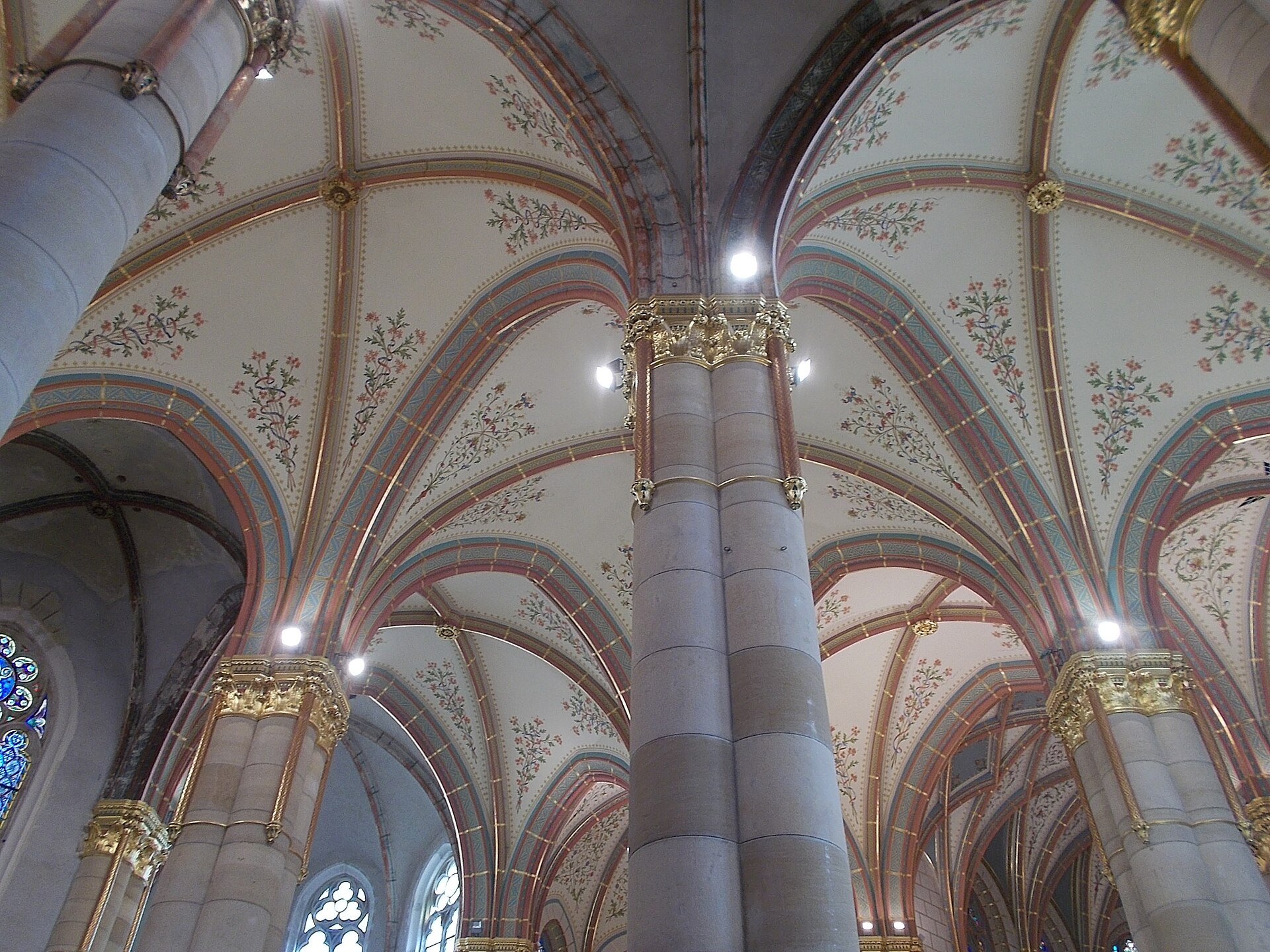
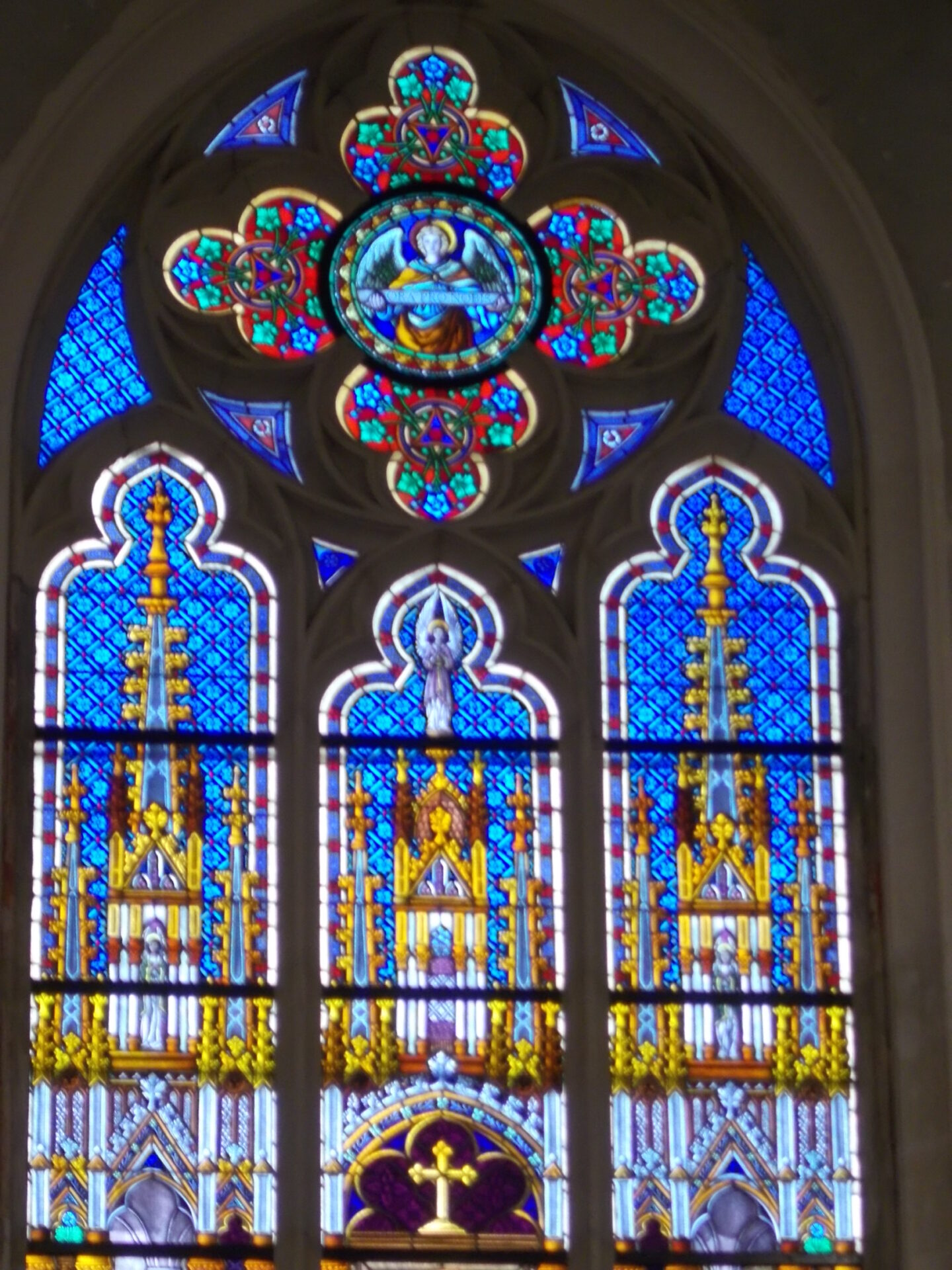
The interior is marked by austerity. The vaults of the three-aisled nave rest on two rows of columns with ornate capitals; the Neo-Gothic ornamental painting is by Adolf Götz. Most of the original painted glass windows were destroyed in World War II.
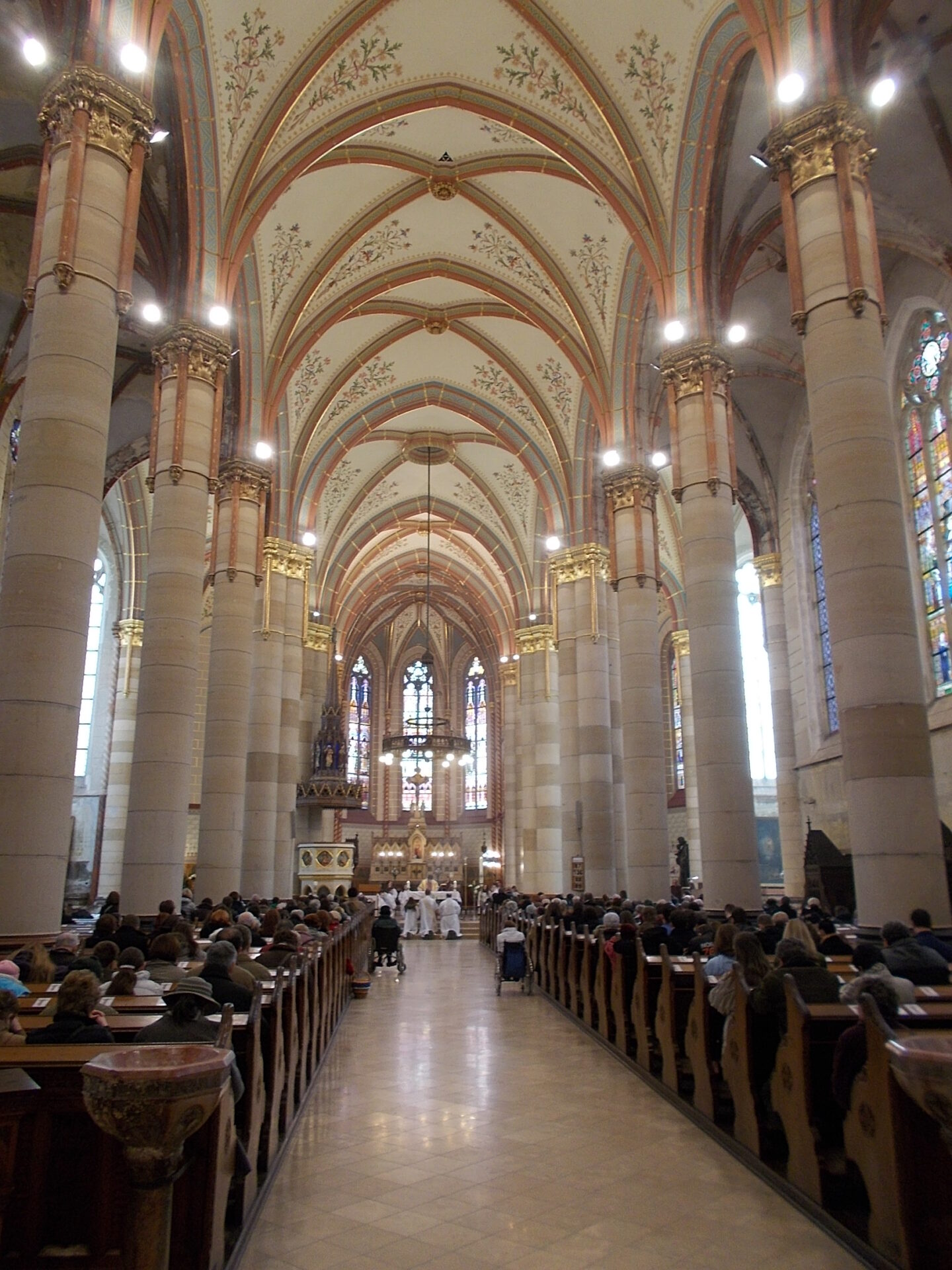
- Pulpit: from the workshop of Sándor Hauszmann, with reliefs of the four evangelists.
- Gilded wooden altars and the canopy above the pulpit: by Mór Hölzel.
- Paintings of saints and biblical scenes: Gyula Aggházy and Lóránt Zubriczky.
- Chapel altars: the Requiem altar is by Ede Mayer; the wedding altar is the last work of Miklós Köllő.
- Baptismal font: carved in stone by Sándor Hauszmann, with a bronze crown by Gyula Jungfer.
- High altar: marble, onyx and bronze; the gilded tabernacle is by Lajos Lantay, with statues of Hungarian saints and blesseds.
- Most of the windows were made by Miksa Róth, alongside Gida Walther and József Palka.
- A communion rail (by Nándor Páder) separates the nave from the sanctuary; the pews and stalls were made in the furniture factory of Károly Lingl.
The organ
The church’s organ was built in 1901 by the workshop of Sándor Országh and Son. It soon fell into disrepair, so the firm Rieger rebuilt it in 1909; its control system was electrified in 1936–37. It remained in use until 1996, and restoration work only began in 2018.
The bells
The church originally had several bells; some of them were taken away for war purposes, and in 1925 the faithful had new ones cast. Three bells hang in the tower today. The crown and clapper of the largest of the original bells (2,400 kg, H0) can still be seen in the north-east tower.
| Bell | Weight | Pitch | Notes |
|---|---|---|---|
| Great bell | 1,166 kg | D♯1 | Ecclesia Bell Foundry, Budapest, 1925; cast in honour of St Ladislaus by the faithful of Erzsébetváros in the Holy Year 1925. |
| Small bell | 509 kg | G♯1 | Ecclesia Bell Foundry, Budapest, 1925; inscribed: “O glorious king’s daughter, pride of our nation, pray for us.” |
| Death knell | 211 kg | C♯2 | — |
The history of the church: Our History.
Source: Árpád-házi Szent Erzsébet-plébániatemplom (Erzsébetváros) – Hungarian Wikipedia (CC BY-SA), itself based on Budapest lexikon I. (ed. Berza László, 1993), supplemented with Ágnes Gerenday, Budapest – Árpád-házi Szent Erzsébet-templom (1998), and the parish’s own notes. Photos are from Wikimedia Commons; authors and licences are given in the captions.